






Every Canton winter finds the weak spots in a house. A loose shingle that held through summer, a gutter packed with leaves, a strip of siding that has been letting wind in for years, an attic that leaks heat into the roof deck: none of them announce themselves in October, and all of them show up on a cold January night, either as a ceiling stain or as a heating bill that keeps climbing.
This guide walks through what Northeast Ohio winters actually do to a home, where Canton houses tend to lose heat and let water in, and what to check on your roof, attic, siding, gutters and windows before the deep cold sets in. It also covers the questions we hear most from Stark County homeowners this time of year.
The short answer
To get a Canton home winter ready, have the roof inspected before the first hard freeze, clean and secure the gutters once the leaves are down, seal gaps in the siding and around windows, and make sure the attic is properly insulated and ventilated. Those four steps cover most of the winter roof leaks, ice dams and runaway energy bills we see in Stark County, and the inspection tells you which of them your house actually needs.
What a Canton winter actually does to a house
National Weather Service normals for Akron-Canton show about 75 nights at or below freezing between December and February, while the average winter afternoon high sits near 38°F. That daily swing above and below freezing is what makes Canton winters hard on a house. Water gets into small gaps during the day, freezes and expands overnight, and slowly works fasteners loose and pries flashing joints open. A normal season adds about 47 inches of snow, with January the snowiest month.
Last winter ran harder than normal. Akron-Canton logged 79 nights at or below freezing, 11 nights at or below zero and about 48 inches of snow, and after Winter Storm Fern the Ohio Department of Commerce urged homeowners statewide to inspect their roofs for ice dams. The growing season around Akron-Canton normally ends near October 25, so by the time most people think about winter prep, the first hard freeze is already here or close.
Why older Canton homes feel winter first
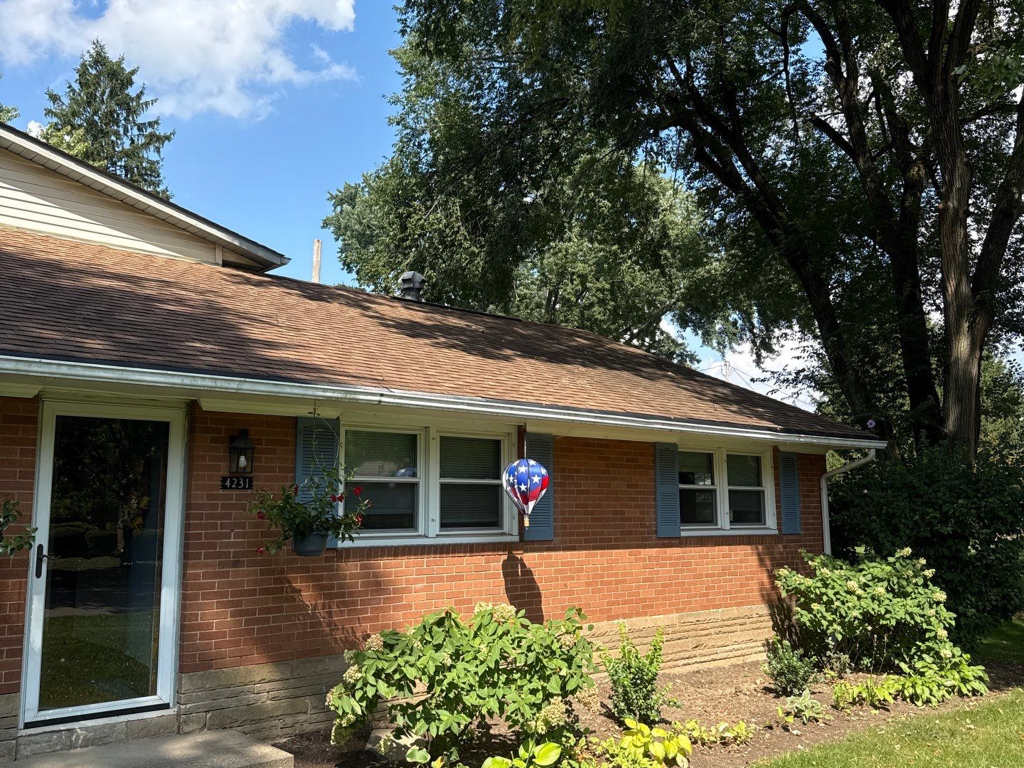
Canton’s housing is older than most. The median home in the city was built in 1947, and roughly 41 percent were built before 1940, long before modern energy codes existed. Older homes often have thin or settled attic insulation, plank roof decking instead of sheathing, more than one old layer of shingles, original windows and decades of patched flashing around chimneys. Each of those is a place where heat escapes or water gets in.
That does not mean an older home cannot be warm and dry. It means a winter checklist written for a new subdivision will miss things. The rest of this guide is written with Canton’s housing stock in mind.
Your roof: the first line of defense before the first freeze
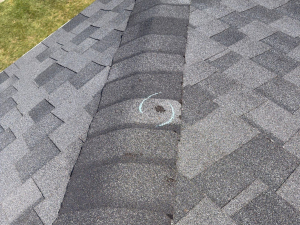
A roof that is sound in October can still fail in January if small problems are left alone. Missing, cracked or curled shingles let wind get underneath and lift the courses around them. Failed pipe boots and loose chimney flashing let water in during every thaw. Granules collecting at the bottom of your downspouts are a sign the shingles are wearing through their protective surface.
The problem with winter roof damage is that it rarely shows up right away. Water travels along the roof deck and rafters before it drops, soaking insulation along the way, and by the time a stain appears on a ceiling the leak may have been running for weeks. Wet insulation also loses much of its value, so a small roof leak quietly raises your heating bill too.
A free roof inspection in Canton before the deep cold is the simplest way to find these issues while they are still small. If something does need attention, a targeted roof repair now is almost always cheaper than chasing a winter leak through the attic later. And if your roof is near the end of its life, our guide on replacing a roof in fall versus spring explains what is and is not realistic once temperatures drop.
Attic insulation and ventilation: the hidden part of your heating bill
Most of the heat a house loses in winter goes up. The EPA’s ENERGY STAR program estimates that homeowners save an average of 15 percent on heating and cooling costs, or about 11 percent of total energy costs, by air sealing their homes and adding insulation in attics, floors over crawl spaces and basements. For Ohio’s climate zone, the Department of Energy’s recommendation for attic insulation is R-49 to R-60. ENERGY STAR offers a quick check: if your attic insulation is level with or below the tops of the floor joists, you probably need more.
Insulation is only half of the attic. The other half is ventilation, and Ohio’s building code is specific about it. The Residential Code of Ohio sets a baseline of 1 square foot of net free ventilating area for every 150 square feet of attic. The reduced 1:300 ratio is only allowed when 40 to 50 percent of that ventilation sits within 3 feet of the ridge and the rest sits low, in the bottom third of the attic. In practice that means balanced intake at the soffits and exhaust near the ridge, with intake equal to or greater than exhaust.
Why it matters in winter: a warm, poorly ventilated attic heats the underside of the roof deck. Snow melts from below, runs down to the cold eaves and refreezes into an ice dam, which then pushes meltwater back up under the shingles. If you have seen thick ice along your gutters or stains where ceilings meet exterior walls, read our page on ice dam roof repair and prevention. The fix starts in the attic, not on the roof.
Siding: more than how your house looks
Siding is your home’s weather barrier as much as its finish. When panels crack, loosen or pull away at the seams, wind driven rain gets behind them and soaks the sheathing, and cold air finds its way into the wall cavities. Neither problem shows from the street, and both get worse every freeze and thaw cycle.
Walk the outside of the house and look for cracked, warped or missing pieces, gaps at corners and around window and door trim, and any spot where siding has pulled loose after a storm. On older Canton homes, siding that has been failing for years often hides water damage underneath. When we handle siding replacement in Canton, we inspect the sheathing and framing once the old panels come off and install a proper weather barrier, so the problem is fixed rather than covered over. It is also the natural time to make sure the flashing and trim around every window are sealed correctly.
Gutters and downspouts before the leaves finish falling
Gutters do more winter damage when they are neglected than almost any other part of the exterior. A gutter full of wet leaves holds water right at the roof edge, where it freezes into the start of an ice dam. Sagging gutters pool water instead of draining it, and the weight of ice can bend them or pull them off the fascia entirely. Downspouts that dump water next to the house send it straight to the foundation every time snow melts.
The best time to clean gutters in Canton is after most of the leaves have dropped but before the first lasting snow, usually late October into November. While you are at it, check that downspouts carry water well away from the foundation and that the gutters still slope toward them. If your gutters overflow every heavy rain no matter how clean they are, the problem is usually size. Our seamless gutters in Canton are formed on site to the exact length of your roofline and sized to the roof area that drains into them, with guards where tree cover justifies them.
Windows: where a surprising share of heat escapes
According to the Department of Energy, heat gain and heat loss through windows are responsible for 25 to 30 percent of residential heating and cooling energy use. In older Canton homes with original windows, much of that loss comes from air leaking around the frames and sashes rather than through the glass itself.
Before winter, check for drafts by holding your hand near the edges of each window on a windy day. Fresh caulk where the trim meets the siding and new weatherstripping on the sashes are inexpensive fixes. If full replacement is not in the budget, the Department of Energy notes that low-emissivity storm windows can deliver energy savings similar to replacement windows at roughly a third of the cost.
What an updated, code compliant system fixes
Many of the winter problems Canton homeowners deal with are not separate issues. They are symptoms of a roof, attic and exterior that are no longer working together. When a roof is replaced properly, to manufacturer specification and the current Residential Code of Ohio, several of them are solved at once.
| Winter problem | Usual cause | What fixes it |
|---|---|---|
| Ice dams and ceiling stains along outside walls | Warm attic, poor ventilation, no ice barrier at the eaves | Air sealing and insulation, balanced ventilation, and ice and water shield at the eaves and valleys |
| High heating bills and cold upstairs rooms | Thin or wet attic insulation and air leaks into the attic | Insulation to the recommended R-value and sealed attic penetrations |
| Shingles lifting or blowing off in winter wind | Old shingles whose seal has failed, or poor nailing | New shingles installed and sealed to manufacturer specification |
| Leaks during every thaw | Failed pipe boots and worn chimney or wall flashing | New flashing at every penetration rather than sealant over old metal |
| Soft spots on the roof | Decking rotted by years of slow leaks | Tear off to the deck and replacement of damaged sheathing |
| Water at the foundation after snowmelt | Undersized or clogged gutters and short downspouts | Properly sized seamless gutters with downspouts routed away from the house |
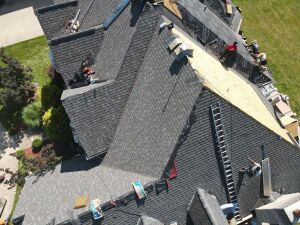
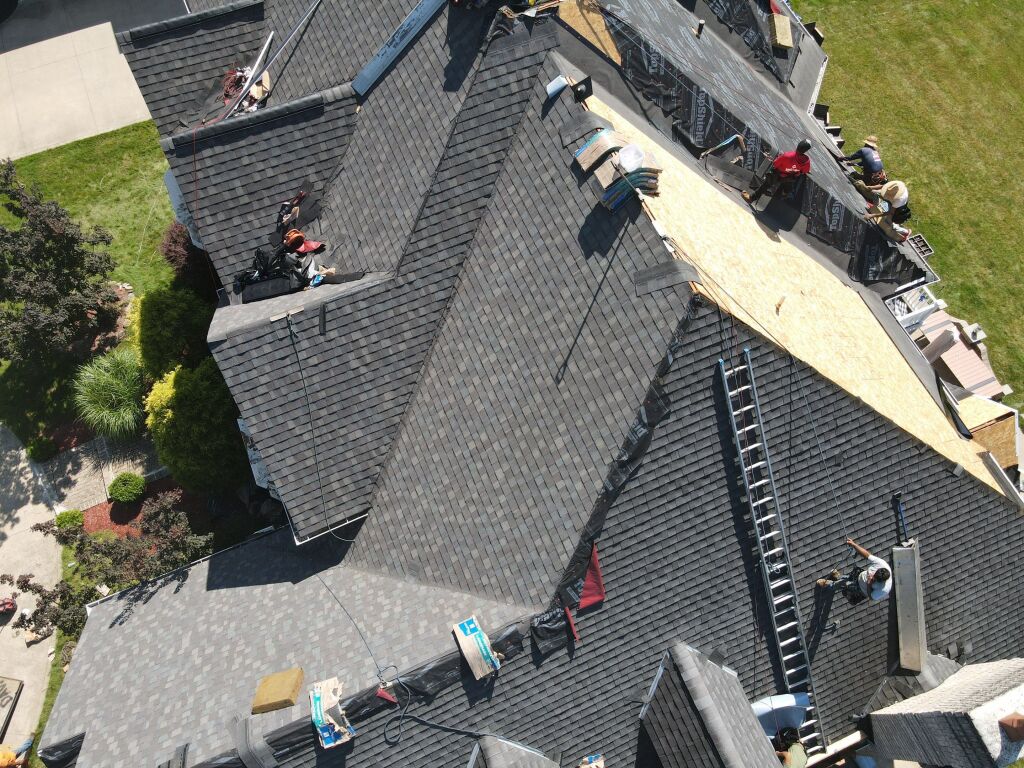
On every roof replacement in Canton, we tear off to the decking, replace softened sheathing, run ice and water shield at the eaves and valleys, install new flashing and correct the attic ventilation before a single shingle goes on. Reroofing requires a permit in Stark County, and we confirm which office covers your address and handle it as part of the job.
Help with winterizing costs in Stark County
Some of the most effective winter upgrades are available at no cost to income eligible households. In Stark County, the Home Weatherization Assistance Program is run through the Stark County Community Action Agency for homeowners and renters with household incomes at or below 200 percent of federal poverty guidelines. It can include a household energy audit, a heating system inspection, and attic and sidewall insulation. Beginning July 1, 2026, the program is administered statewide by the Ohio Department of Job and Family Services, and an Ohio community action agency reports that weatherizing a home reduces a family’s energy bills by 20 to 30 percent a year on average.
Enbridge Gas Ohio customers may also qualify for the Housewarming Program, which provides free weather-stripping, attic and sidewall insulation and door sweeps to eligible households.
One thing to know: the county’s weatherization program states that it does not replace roofs, install siding or install gutters. If your home needs both, the two work well together, with the program handling insulation and air sealing and a roofing contractor handling the roof, siding and gutters that keep water out.
Winter prep notes for communities near Canton
The same winter applies across our service area, but the details change from town to town, especially when it comes to permits.
Perry Township and Plain Township. Both are largely unincorporated, so reroofing permits there run through the Stark County Building Department, which lists roof replacement among the residential projects that require one. Mailing addresses are misleading on both sides of Canton: many Perry Township homes carry a Canton or Massillon address, and Plain Township is home to GlenOak High School, which uses a Canton address despite sitting in the township.
North Canton, Jackson Township and Massillon. These communities share Canton’s weather and much of its housing age, so the same checklist applies. See our pages for North Canton, Jackson Township and Massillon for local permitting details.
Akron, Barberton and the Portage Lakes. North into Summit County, housing gets slightly newer but not by much: the median home in Akron was built in 1954. Barberton runs its own Building Department, while homes around the Portage Lakes in New Franklin and Coventry Township use the Summit County Department of Building Standards. Lakefront homes there also take wind off open water, which makes sealed shingle edges and secure gutters worth checking before winter.
You can see every community we serve on our Stark County roofing page.
Fall and winter questions Canton homeowners ask
When should I clean my gutters before winter in Canton?
After most of the leaves have fallen but before the first lasting snow, which in Canton usually means late October into November. If you have a lot of mature trees, a second cleaning once the last leaves drop is worth it, since gutters packed with wet leaves are a common starting point for ice dams.
How much attic insulation does a home in Ohio need?
For Ohio’s climate zone, the Department of Energy recommends R-49 to R-60 in the attic. ENERGY STAR’s quick check is simple: if your insulation is level with or below the tops of the attic floor joists, you probably need more. Air sealing the attic floor before adding insulation makes a large difference to the result.
Should I get my roof inspected before winter?
Yes, especially if your roof is more than 15 to 20 years old, has been through a recent storm, or you have noticed granules in the gutters or stains on ceilings. Small problems like a failed pipe boot or lifted shingles are much easier to fix before freezing weather turns them into winter leaks.
Is it too late to replace my roof before winter in Ohio?
Not necessarily. Roofs can be replaced in late fall and even in winter when the manufacturer’s cold weather procedures are followed, including hand sealing shingles. The colder it gets, the more those procedures matter, so ask your contractor exactly how they will handle sealing.
How do I stop ice dams from forming on my roof?
Ice dams start with heat escaping into the attic. Sealing air leaks into the attic, adding insulation where it is thin, balancing the attic ventilation and installing ice and water shield at the eaves all address the cause. Removing ice from the roof only treats the symptom.
Does homeowners insurance cover winter roof damage?
It depends on your policy and the cause. Many policies cover sudden damage, such as water forced into the home by an ice dam or a storm, while damage from wear, age or neglected maintenance is generally excluded. Photograph any damage before repairs and contact your insurer promptly.
Is there help paying for weatherization in Stark County?
Yes, for eligible households. The Home Weatherization Assistance Program, run through the Stark County Community Action Agency, serves homeowners and renters with incomes at or below 200 percent of federal poverty guidelines, and Enbridge Gas Ohio’s Housewarming Program offers free weather-stripping and insulation to eligible customers.
Get your Canton home checked before the deep cold
If you are not sure where your house stands, the easiest first step is a free inspection. Right Choice Exteriors is a family owned and veteran owned roofing contractor working from Whipple Avenue SW in Canton since 2014. We will look at the roof, flashing, gutters, siding and attic, photograph what we find, and tell you plainly what needs attention before winter and what can wait. Completed work is backed by our 12 year workmanship warranty, and nothing is due until the job is finished and you are satisfied.
Call or text 330-949-9141, or book your free roof inspection online. If water is already coming in, see our emergency roof repair in Canton.