






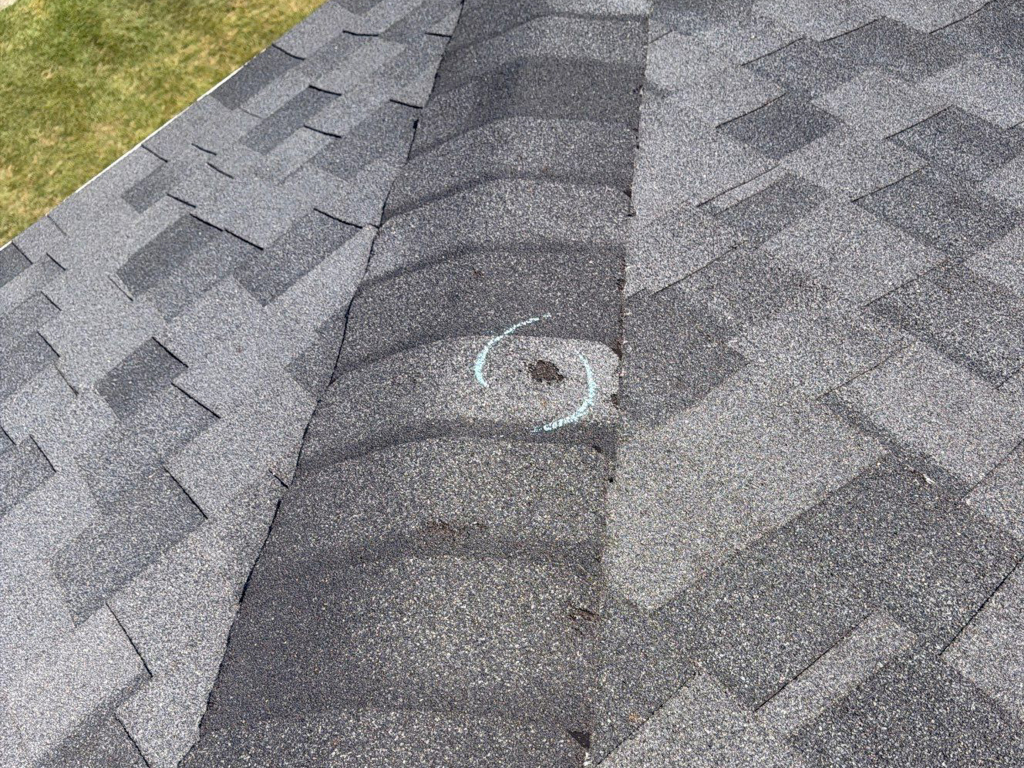
After a hailstorm or a severe wind event, most Northeast Ohio homeowners face the same questions within a day or two. Is this covered? How long does the insurance company have to respond? What should happen before the adjuster arrives, and who should look at the roof?
Ohio answers several of those questions in writing. The state’s insurance regulations set deadlines insurers must meet, require them to explain any denial, and describe how mismatched materials must be handled. This guide walks through what those rules say, what your policy decides instead, and how to protect your claim from the first day.
The short answer
In Ohio, your insurer must acknowledge a property claim within 15 calendar days, decide whether to accept or deny it within 21 days of receiving a completed proof of loss, and pay within 10 days of accepting it when the amount is settled. Those deadlines come from Ohio Administrative Code rule 3901-1-54. Whether your roof damage is covered depends on your policy, and above all on whether the damage came from a sudden event like hail or wind rather than age and wear.
What deadlines does an Ohio insurer have to meet?
Property claim handling in Ohio is governed by Ohio Administrative Code 3901-1-54, titled “Unfair property/casualty claims settlement practices.” The current version took effect on February 14, 2022. It counts calendar days, not business days, and when a deadline lands on a weekend or holiday it moves to the next business day.
| What the insurer must do | Deadline | Rule section |
|---|---|---|
| Acknowledge your claim | 15 days after notice | (F)(2) |
| Respond to your communications that call for a reply | 15 days | (F)(3) |
| Accept or deny the claim | 21 days after a properly executed proof of loss | (G)(1) |
| Tell you in writing if it needs more time | Within those 21 days, then at least every 45 days | (G)(1) |
| Pay an accepted, undisputed claim | 10 days after acceptance | (G)(6) |
| Warn you before a policy or legal deadline expires | At least 60 days beforehand, if you have no attorney | (G)(5) |
Two details matter more than they look. The 21 day clock starts from a properly executed proof of loss, meaning a document that gives the insurer enough information to determine whether the claim exists and how much it is worth. It does not start from your first phone call. And an insurer can meet the 15 day acknowledgment simply by sending claim forms and instructions, so a quick acknowledgment does not mean a quick decision.
The same rule requires an insurer to fully disclose the coverages in your policy that apply to your claim. It also bars an insurer from denying a claim on a specific policy provision, condition or exclusion unless the denial refers to it. If your claim is denied, you are entitled to know exactly which part of the policy the insurer is relying on.
What does homeowners insurance usually cover on a roof?
The Ohio Department of Insurance notes that standard homeowners policies generally cover damage from hail, wind, lightning, water and tornadoes once the deductible is met. Flood damage is different and requires a separate flood insurance policy.
What policies do not cover is the slow decline of a roof: wear, age, deferred maintenance or a poor original installation. That distinction drives most roof claim disputes. A 20 year old roof that has been shedding granules for years and a 20 year old roof bruised by hail last Tuesday can look similar from the driveway. Only one of them is a covered loss.
Two policy terms decide how much you are paid. Replacement cost coverage pays what it costs to replace damaged materials today. Actual cash value pays that replacement cost minus depreciation. Ohio’s rule defines actual cash value in exactly those terms for these policies, and requires the insurer to give you documentation of every depreciation deduction if you ask for it. Some policies settle older roofs on an actual cash value basis, so check your declarations page and any roof endorsements before you need them.
Your deductible is your share of the claim, and you pay it. Some policies carry a separate wind or hail deductible, and some calculate it as a percentage of your dwelling coverage rather than a flat dollar amount, which can make it considerably larger than expected. Paying your own deductible is simply how every insurance job works with Right Choice Exteriors, and it is how it should work with any contractor you hire.
Does Ohio require insurers to replace the whole roof if shingles do not match?
Not automatically, and this is one of the most misunderstood parts of Ohio’s rules.
Under section (I)(1)(b) of the rule, when a policy pays on a replacement cost basis and the replacement material does not match the damaged material in quality, color or size, the insurer must replace as much of it as needed to produce a reasonably comparable appearance.
That standard protects you from an obviously patched roof. It does not guarantee a full replacement every time a few shingles are damaged. Whether a reasonably comparable appearance requires one slope, several slopes or the whole roof depends on the materials, the extent of the damage and whether a close match is still manufactured. The provision also applies specifically to replacement cost settlements.
When matching is in question, the evidence that helps is specific: the shingle manufacturer and product line, whether that product is still made, and photographs showing the color and profile difference. A documented inspection should record all three.
What should you do in the first few days after a storm?
Stay safe and stay off the roof. Wet, damaged shingles are hazardous, and walking on a damaged roof can add damage that complicates the claim.
Document before anything changes. The Ohio Department of Insurance advises homeowners to photograph damage and losses, and to document them before removing debris. Note the date and time of the storm and when you first noticed damage. Photograph ceiling stains, damaged gutters, dented vents and anything that came down in the yard.
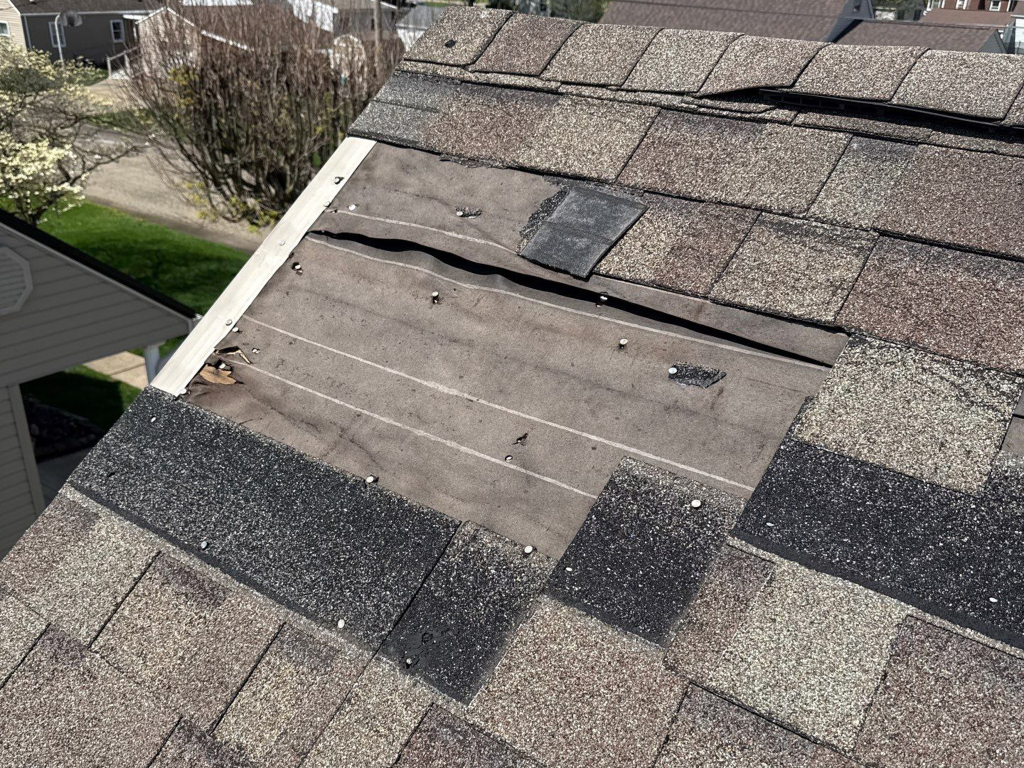
Prevent further damage, but keep repairs temporary. If water is coming in, a tarp or temporary patch protects your home. The Department’s severe weather toolkit notes that insurers typically reimburse the cost of those emergency repairs as part of the claim, so keep every receipt. Hold off on permanent repairs until the insurer has had the chance to inspect, because removing damaged materials removes the evidence. If you need water stopped quickly, emergency roof repair and tarping is built for exactly that.
Contact your insurer promptly. Ohio’s rule limits when an insurer can deny a claim for late written notice, but your policy still sets its own reporting requirements, and the longer you wait the harder it becomes to tie damage to a specific storm date. Ask for a claim number and the name of your assigned adjuster.
Put it in writing. Follow phone calls with a short email summarizing what was said. Ohio’s response deadlines apply to communications that call for a reply, and a written record makes those deadlines meaningful.
Why documentation decides most roof claims
Most roof claim disputes are not really about whether a roof is old. They are about cause. Was this damage created by the storm on a specific date, or by years of weather? Answering that takes more than a quick look from a ladder.
Right Choice Exteriors holds HAAG certification for residential roof inspection. HAAG has worked in forensic damage assessment since 1924, and its residential roof certification requires at least 100 steep slope roof inspections as the primary on site inspector before a candidate can sit the exam. HAAG’s eligibility rules count adjusted insurance claims as qualifying inspections, which tells you who the training is built for: the people whose job is deciding what storm damage looks like.
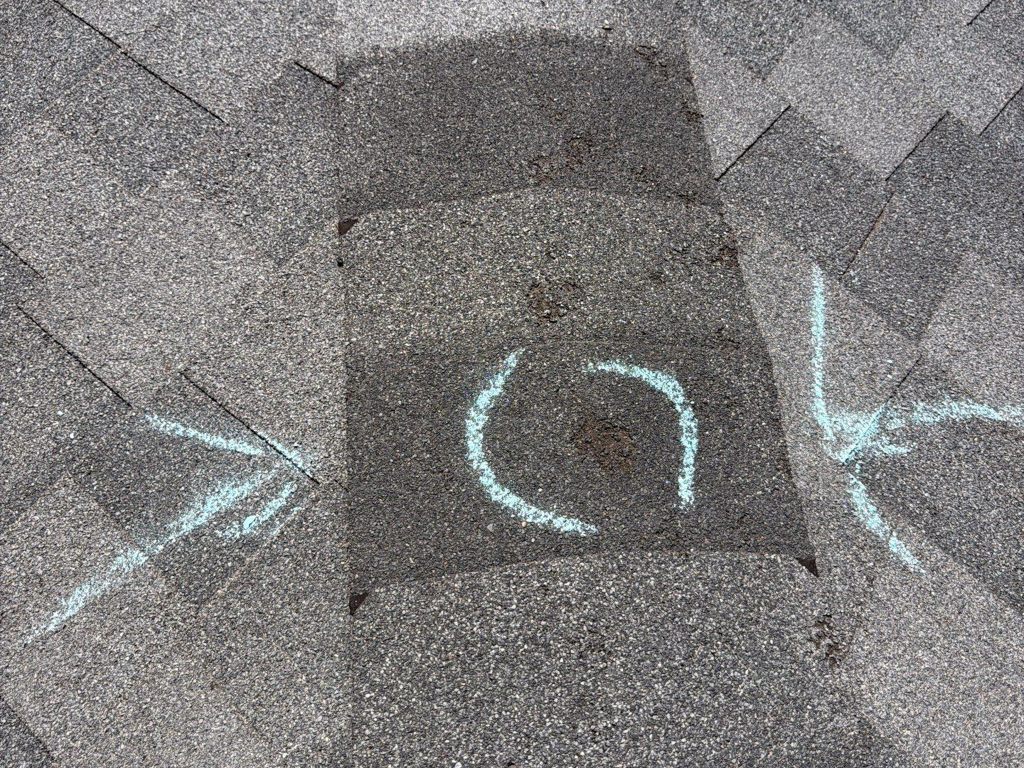
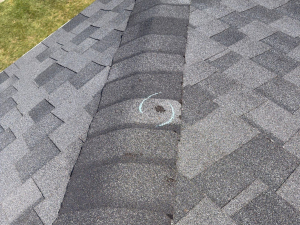
In practice, an inspection to that standard separates hail and wind damage from the things that resemble it, including manufacturing defects, foot traffic, mechanical damage and normal granule loss. It looks at the pattern, density and direction of impacts across each slope, and at collateral damage on gutters, vents and other soft metals. Every finding is marked and photographed, and temporary protection goes on only after the damage is recorded.
You keep the photographs whether or not you hire us, and we will tell you plainly when the damage does not look like it would support a claim. Filing on a roof that has simply worn out helps nobody. A free roof inspection is the honest place to start.
How do you choose a storm damage contractor in Ohio?
Storms bring contractors in from out of the area, and the Ohio Department of Insurance warns that unsolicited contractors may be fraudulent. Its severe weather guidance lists warning signs worth knowing: a contractor who is not registered with the Ohio Secretary of State, one who asks for power of attorney over your affairs, and one who wants to negotiate or settle your insurance claim for you. The Department also advises against signing a contract before an adjuster has surveyed the damage.
A contractor’s legitimate role is narrower and more useful than that. Inspect the roof accurately, document what is there, be available when the adjuster inspects, and write a clear scope of work. Coverage decisions stay between you and your insurance company.
A few more checks help. Look for a local office you can actually visit. Ask for proof of liability and workers’ compensation insurance, and confirm it with the insurer rather than accepting a certificate at face value. Get everything in a written contract, and be wary of anyone who wants a large payment before work begins. At Right Choice Exteriors, nothing is due until the work is complete and you are satisfied.
What if you disagree with the insurer’s decision?
Start with what Ohio’s rule already entitles you to. Ask the insurer in writing for the specific policy provision behind any denial, and for documentation of any depreciation it deducted. Then compare the insurer’s estimate line by line against the actual damage. Items such as flashing, vents, gutters and decking are easy to miss in an estimate and worth checking individually.
If you cannot resolve it with the company, the Ohio Department of Insurance Consumer Services Division handles complaints about how insurers handle claims, at 800-686-1526. The Department is clear about its limits: it cannot settle factual disputes over the value of damaged property. Disagreements about the amount may involve your policy’s appraisal provision or professional advice, depending on the situation.
This article explains Ohio’s published claim handling rules in general terms. It is not legal advice, and your policy language controls your specific coverage.
Frequently asked questions
How long does an insurance company have to respond to a roof claim in Ohio?
Under Ohio Administrative Code 3901-1-54, an insurer must acknowledge your claim within 15 calendar days and decide whether to accept or deny it within 21 days of receiving a properly executed proof of loss. If it needs longer, it must tell you why within that 21 day window and update you in writing at least every 45 days. Once a claim is accepted and the amount is undisputed, payment is due within 10 days.
Does homeowners insurance cover an old roof in Ohio?
Age alone does not decide it. Sudden damage from a covered event such as hail or wind is generally covered, while wear, age and deferred maintenance are not. Some policies settle older roofs on an actual cash value basis, which reduces the payment by depreciation, so check your declarations page and any roof endorsements.
Will my insurance replace my whole roof if new shingles will not match?
Not necessarily. Under Ohio’s rule, when a replacement cost policy applies and the new material does not match in quality, color or size, the insurer must replace enough to produce a reasonably comparable appearance. That might be one slope or the whole roof, depending on the materials, the damage and whether a matching product is still available.
Can I make repairs before the adjuster inspects my roof?
Make temporary repairs that prevent further damage, such as tarping, and keep every receipt, since insurers typically reimburse those costs as part of the claim. Wait on permanent repairs until the insurer has inspected, because removing damaged materials removes the evidence the claim depends on.
Should a contractor handle my insurance claim for me?
No. The Ohio Department of Insurance advises homeowners not to give a contractor power of attorney or allow a contractor to negotiate or settle an insurance claim. A good contractor documents the damage, can be present when the adjuster inspects, and writes an accurate scope of work, while you stay in control of the claim.
Does a free roof inspection obligate me to file a claim or hire you?
No. A free roof inspection from Right Choice Exteriors carries no obligation. You keep the photographs and our findings either way, and if the damage does not look like it would support a claim, we will tell you before you file.
Get your roof documented properly
If a recent storm has you wondering about your roof, the strongest first step is an inspection documented to the standard insurers recognize. Right Choice Exteriors is a family owned and veteran owned roofing contractor working from Canton since 2014, with HAAG certified residential roof inspections and no payment due until the work is finished and you are satisfied. Learn how we approach storm damage and insurance claims, or call 330-949-9141 to book your free roof inspection.