







Most roof leaks do not announce themselves. By the time a stain appears on a ceiling, water has usually been travelling through the structure for weeks. Catching the early signs is the difference between a repair and a rebuild.
1. Stains that appear away from the roof line
Water runs along decking and rafters before it drops, so the stain on your ceiling is rarely underneath the actual failure. A mark above a bedroom can start several feet uphill at a failed pipe boot or a valley that has lost its seal. If you see discoloration anywhere on a ceiling or an upper wall, treat it as a roof issue until proven otherwise.
2. Granules collecting in the gutters
Asphalt shingles shed their protective granules as they age. A few after a new install is normal. A steady accumulation at the downspout outlets means the mat underneath is becoming exposed, and once that happens the shingle degrades quickly under Ohio sun and freeze cycles.
3. Shingles that are lifted, curled or creased
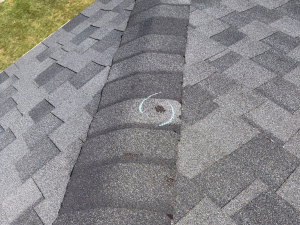
Wind damage usually shows first along ridges and roof edges, where the loading is most direct. Once a tab lifts and breaks its seal, the next storm gets underneath it more easily. Creased shingles in particular indicate the seal has already failed even if nothing is missing yet.
4. Daylight or damp decking in the attic
Go up on a dry day and look. Daylight through the boards, damp sheathing, or matted insulation all point to active water entry. This is also where undersized ventilation shows itself, and poor ventilation shortens the life of a roof from underneath regardless of how good the shingles are.
5. Flashing that has separated or rusted
Chimneys, wall junctions and vent penetrations are the most common leak points on any roof. On Canton homes built before 1940, and there are a great many of them, that flashing is frequently original and doing far more work than it was designed for.
What to do next
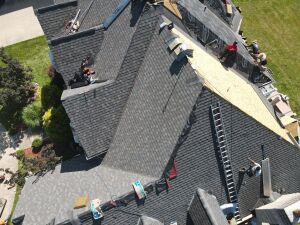
None of these signs automatically means you need a new roof. A structurally sound roof with one failed pipe boot should be repaired, and we say so regularly. What matters is finding the actual source before water reaches insulation and framing, because that is where a modest repair turns into an expensive one.
If the damage followed a hail or wind event, document it and have it inspected. Storm damage is frequently covered by a homeowners policy, and proper documentation is what keeps a legitimate claim moving.